Showing posts with label Auctions. Show all posts

Wednesday, November 26, 2008

"A New Fire Under the Sacramento Housing Market"

From the Sacramento Bee:

Sacramento-area home prices declined at nearly triple the national average during the past year, according to a new Loan Performance Home Price Index from First American CoreLogic. The property research firm said September home prices in El Dorado, Placer, Sacramento and Yolo counties fell 28 percent from the same month in 2007.
From the Sacramento Business Journal:
[Per CAR] the median price of an existing home in Sacramento fell 34.8 percent to $195,000, with the city of Sacramento seeing a 45.1 percent drop to $150,000. Elsewhere in the region, the median price of a home in El Dorado County was $387,000, down 3.7 percent; in Placer County it was $320,000, down 20 percent; while in Yolo County, it was $279,000, down 22.5 percent.
From the Seatle PI:
The biggest annual metro-area drops were in Merced, Stockton and Modesto, Calif., down 42.3 percent, 41.4 percent and 36.7 percent, respectively, according to the Federal Housing Finance Agency index.
According to FHFA (formerly OFHEO), Sacramento metro home prices dropped 22.5%, another record decline.

From the Sacramento Bee:
The federal government's newest bailout package has lit a new fire under the Sacramento housing market. The government's move, announced Tuesday, brought mortgage rates down nearly a full percentage point. It brought some new buyers out of the woodwork..."Where Friday is going to be black Friday for retail people, it'll be a day for people to start looking for houses," said Alan Wagner of Re/Max Gold, president of the Sacramento Association of Realtors. "We're seeing hits on the Internet sites going up."
From the SF Chronicle:
Jon Haveman, with Beacon Economics in San Rafael, said the variations [in unemployment rates] have to do with housing. The regions with the biggest price inflation are suffering the worst due to a falloff in construction and the psychological impact that foreclosures and falling home prices have on consumer spending. "This all began with the housing bubble, and it was in places like the Central Valley, the Inland Empire and the East Bay where prices got most out of whack," he said.
From Kiplinger (via Yahoo) (hat tip Jeff):
The market hit hardest by the housing bubble is the Central Valley in California, where aggressive development and price hiking has yielded more homes than jobs. Now many homeowners owe more than their house is worth and are being forced into default.

Still, it's not all doom and gloom for the California housing market. The drop in home values has created an affordable market for first-time home buyers. And, on average, monthly sales have almost tripled from last year. Although the Valley has seen the worst of the crash, it may well be one of the first areas to recover.
From Housing Wire:
In the Merced, California area...average home prices have declined 43 percent over the past 12 months, and are projected to fall another 22 percent by the middle of 2009,...data provider [Fiserv] said.
From the Sacramento Bee:
In December, REDC will put up for auction 1,288 Northern California homes during a five-day marathon. Leonard Green, a Sacramento real estate broker who works the multiday events, said most bidders are investors, and "a lot of them follow us from town to town."
...
"What these really are are bank marketing events," said Sean O'Toole, owner of ForeclosureRadar, a foreclosure tracking firm in Contra Costa County. "The idea is to create excitement and hype around these properties to deliver a better price to the bank than they would get with a traditional sale through a Realtor."

Tuesday, October 14, 2008

MLS Inventory "Not a Realistic Picture of the Market"

From the Sacramento Bee:

The number of for-sale signs in El Dorado, Placer, Sacramento and Yolo counties fell in September to a 19-month low of 11,022, Sacramento property researcher TrendGraphix reported [pdf] Monday. The newest tally is down from 11,369 in August – and off sharply from a record high of 16,081 homes for sale in September 2007.
From the Sacramento Business Journal:
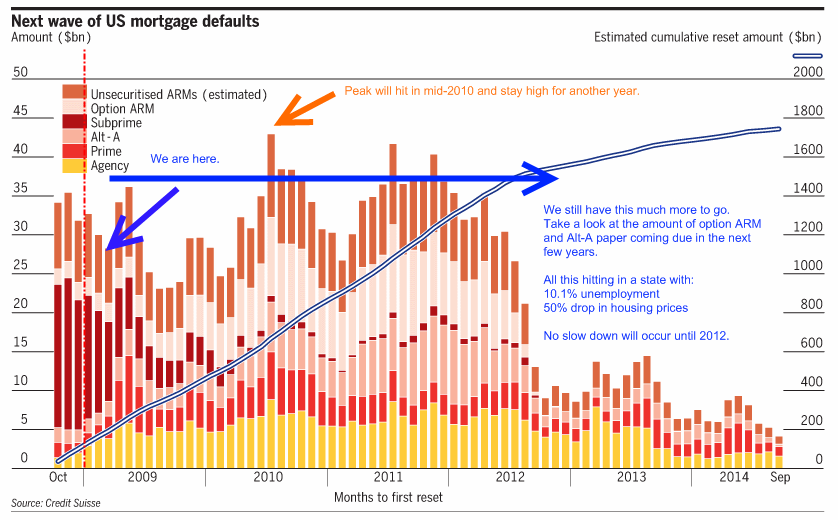
[T]here might not be a quick end to those foreclosures, said Mike Lyon, chief executive at Lyon Real Estate. He offered a grim forecast that foreclosed homes might clog the market for an additional four years, a result of adjustable-rate mortgages resetting at much higher rates, further erosion of homeowners’ equity and surrenders by “early adopter” investors who have bought within the past year.

He said at current buying levels there’s about an eight-month supply of owner-occupied resale homes on the market, while there’s less than a two-month supply of bank-owned homes listed. That doesn’t tell the entire story, however, as there’s a large backlog of foreclosed homes that haven’t yet been put to market, he said. So while the inventory of homes for sale is down compared with last year, it’s not a realistic picture of the market.
From the Sacramento Bee:
[Robert] Shiller offers no sunny forecast. The Yale finance professor, and creator of the Case-Shiller Index that tracks home prices, says the subprime crisis that appeared last year may be "the first act of a long and complex tragedy." "We may well experience several years of a bad economy, as occurred, for example, after the profligate mortgage lending booms in both Sweden and Mexico in the early 1990s," Shiller writes. "There could even be another 'lost decade,' like that suffered by Mexico in the 1980s after its spending spree during the oil price boom, or by Japan in the 1990s after the bursting of the 1980s bubble in its stock and housing markets."
...
[Shiller:] I think we've learned some very elementary lessons. Don't think that because something didn't happen for the last 30 years it won't happen. It's amazing how people thought home prices can only go up. One thing people haven't learned very well is home prices can stay down for 30 years, too. I'm not saying it will. It certainly can happen. Most people still think this is just a temporary interruption and real estate prices are going to soar soon. The real estate market is not cheap yet. It's not to where this bubble started (in late 1998).
...
[Shiller's] book is at its best when explaining how so few in authority imagined what has come to pass. Schiller says they were filled with same housing boom faith held by the public.
From Florida Today:
"I wish I wasn't upside-down on my house. But I am," said economist Sean Snaith, who bought his Orlando-area home in 2006 when he joined the University of Central Florida faculty as director of the Institute for Economic Competitiveness. "But I'm fine. I'm not going anywhere."
From the Mercury News:
Dave Cantrell considered loading the U-Haul in the middle of the night and leaving while his neighbors were asleep. He couldn't bear to face them. He had become a community leader here, rallying his neighbors to stand up to the builder that was planning to auction off one-third of their new Paseo West subdivision at 40 percent discounts.
...
As much as he worried about his neighbors, Cantrell never thought he would become a casualty of the housing crunch. He was a retired Navy man with a solid pension. He had a job in construction management and, with his impressive work ethic, was making $250,000 a year, plus a hefty bonus. His credit rating was in the 700s. So in 2006, he bought a $670,000 house, then spent $100,000 to add a pool and miniature golf course in the back. It seemed sensible enough at the time.
...
In March, just five months after the auction, he lost his construction job. He kept up his mortgage payments for a couple of months, but it became obvious that no matter how many résumés he sent out, he wasn't getting any offers. He stopped paying his mortgage and he and his wife, Darleada, moved north...His grown daughter and son-in-law, who live in the tiny town of Seabeck, Wash., took them in. The Cantrells have been married for 34 years and now live in the one-bedroom, 985-square-foot apartment over a garage. He hasn't lived this way since he was a teenager.

Wednesday, April 23, 2008

'Basically We're in Uncharted Territory'

From the Sacramento Bee:

California's severe housing downturn claimed another fixture of the Sacramento-area homebuilding industry Wednesday when John D. Reynen, co-founder of Reynen & Bardis Communities, filed for personal bankruptcy protection...It's the second major bankruptcy-protection filing involving a privately owned land developer and builder in the capital region.
...
The company, formed more than 30 years ago, has largely shut down homebuilding and recently laid off about half of its 180 employees.
Press release available via Home Front.

From the Sacramento Bee:
During the first three months of the year, banks repossessed a record-shattering 5,278 homes in the Sacramento region, La Jolla-based DataQuick Information Systems said Tuesday. Put another way: The area's first-quarter foreclosures already are half of last year's entire total.
...
The latest foreclosure count shows that for all the initiatives by government and nonprofit and private sectors to keep people in their houses, the telling trend remains a sustained, dramatic rise in home losses and loan defaults. The forecast is for more of the same in the months ahead.
...
"We expect foreclosure rates in Sacramento to rise as long as house prices are declining," said Mark Fleming, chief economist of Santa Ana-based First American CoreLogic. Fleming said 6.1 percent of mortgages in El Dorado, Placer, Sacramento and Yolo counties are 90 days late. A year ago it was 2.1 percent.
Here's a look at notice of default filings for Sacramento County.


2008 Q1: 6,898 (up 113.3% YoY)
1997 Q1: 2,441 (1990s Peak)

From the Appeal Democrat:
Yuba County saw the highest total number of the three counties with 357 notices recorded, an increase of 136.4 percent...Colusa default notices quadrupled to 81. Sutter County defaults zoomed by 195.6 percent to reach 337 notices.

Kory Hamman, a broker who handles foreclosure sales for Hamman Real Estate, of Gridley, said the trend is toward more foreclosures. And it shows no signs of easing soon. "We're seeing more foreclosure activity, and we don't see it slowing down," said Hamman.
From the Stockton Record:
In San Joaquin County, lenders sent out 4,657 notices of default - the first step in the foreclosure process - to homeowners in January through March, up from 3,746 in the final three months of last year. That's a 170 percent first-quarter jump from 1,721 default notices in the first three months of 2007...[T]he number of homes actually repossessed during the first quarter in San Joaquin County nearly topped 2,500, more than a fivefold increase from 440 a year ago.
...
Cameron Pannabecker, owner of Cal-Pro Mortgage Inc. in Stockton and a member of the board of directors of the California Association of Mortgage Brokers, said...he doesn't know any experts not projecting that the number of default notices will continue to double or triple last year's numbers quarter over quarter.
From the Sacramento Bee:
Like the hundreds of others in this Cal Expo exhibition hall, this young Yuba City couple were looking for a home at a bargain price for their three children at a two-day auction of foreclosed homes in Sacramento.

Some bargain hunters are like [Francisco] Cervantes, novices grasping at their chance for the house they've always wanted in a market they have been priced out of for years. Countless other shoppers are investors looking to one day realize a tidy profit in a capitalist economy that rewards good timing.
...
Armand Sarcomo and his wife, Rachel, were eyeing a ranch-style home on five acres listed in the Yuba County community of Browns Valley..."We're looking for a second home," said the 28-year-old union sheet metal worker. "It's a good investment. We're a young family trying to move up and take advantage of the market."
From the Modesto Bee:
Home prices in most Northern San Joaquin Valley cities have dropped significantly more than those elsewhere in California. Newman has suffered one of the state's largest declines in home values: The median March sales price was $177,250, down nearly 54 percent from last year...Stanislaus County homes sold for a median $232,163 last month, which was 33.5 percent less than March 2007....San Joaquin County homes sold for a median $265,000 last month, which was 36.1 percent less than March 2007....
From the Associated Press:
An influential economist who long predicted the housing market bubble cautioned Tuesday that the slump in the U.S. housing market could cause prices to fall more than they did in the Great Depression....Yale University economist Robert Shiller, pioneer of the widely watched Standard & Poor's/Case-Shiller home price index, said there's a good chance housing prices will fall further than the 30 percent drop in the historic depression of the 1930s. Home prices nationwide already have dropped 15 percent since their peak in 2006, he said.
...
"Basically we're in uncharted territory," Shiller said. "It seems we have developed a speculative culture about housing that never existed on a national basis before."

Saturday, April 19, 2008

Sacramento Price Slashing

From Business Week:

BusinessWeek.com, with the help of Mountain View (Calif.)-based Altos Research, a real-time housing research firm, ranked 14 of the country's largest cities based on how much sellers have slashed listing prices. At the top of the list is Sacramento, where the median asking price on Apr. 11 was $226,978—a 41% drop from a year earlier, according to Altos.
From News10:
Just a few years ago it seemed impossible: a home in Sacramento County for under $100,000. But a condominium developer is ready to sell some units at auction Sunday for as little as $85,000...One-bedroom condos were initially listed for $150,000 with three-bedroom units listed at $230,000.
From the Appeal-Democrat:
Median home sales prices in Yuba County dipped to $199,000 in March on nearly a third fewer home sales than a year ago, DataQuick Information Systems said....The sales price has declined $90,000, or 31 percent, from March 2007.
From the Sacramento Bee:
Layoffs are spreading to many segments of the area economy. Michael's Furniture, a Sacramento manufacturer owned by struggling retailer Restoration Hardware, eliminated 108 jobs in March, according to state records...National Distribution Centers, a West Sacramento warehouse, expects to lay off 175 workers at the end of April.

Friday, April 11, 2008

Greg Paquin on New Home Prices: Another 3-5% Till Bottom

From the Sacramento Business Journal:

New-home prices fell for the eighth consecutive quarter to the lowest level since 2003....The Sacramento area's median new-home price declined to $359,000 during the first quarter, a 7.5 percent drop compared to $388,000 in fourth-quarter 2007 -- and $107,000 less than the peak two years ago.
...
First-quarter home sales are about half the number for the same period a year ago, and 1,820 fewer than second-quarter 2006, according to The Gregory Group. "If we're not at the bottom, we're pretty darn close," said Greg Paquin, principal of The Gregory Group.
...
Industry consultant Mike Winn...said the current conditions feel like the bottom of the market. "People are latching onto any indicator they can," said Winn, board chairman of the North State Building Industry Association.
From the Sacramento Bee:
The first of several reports on first-quarter home sales is in, showing the number of new homes sold in the eight-county Sacramento region has fallen to the lowest level since possibly the early 1990s. But amid the dreary statistics there appears to be the suggestion of a market in the beginning stages of stabilizing. Greg Paquin...says the 1,304 new homes sold in January, February and March were almost equal with those sold during the previous quarter...That's not much on which to build a case for recovery. But Paquin and other analysts...say that while the numbers remain discouraging, they can see what looks like a market bottom forming before year's end.
...
Gregory Group statistics showed prices are still falling for new homes. The average $404,144 first-quarter price was off 5.3 percent from the previous quarter and down 13.1 percent from the same time last year. The silver lining: Paquin believes prices probably have just another 3 percent to 5 percent to fall.
...
Doug Pautsch, Sacramento division president of Dallas-based Centex Homes, maintains that buyers believe the market has bottomed and is bouncing back.
...
DataQuick's LePage said banks have sold only about 40 percent of the homes they foreclosed on in the region during the second half of 2007. The thousands more slated for sale will put a downward pressure on prices.
Q1 2008 New Home Sales Chart

For some of Paquin's previous predictions see here.

From the Sacramento Bee:
Folsom-based Elliott Homes Inc. appears well-poised for the long haul after paying $10 million this week for 400 acres of GenCorp Inc.'s unused real estate off Highway 50 in Rancho Cordova. That comes to $25,000 an acre, a lot less than the $100,000-an acre figures some builders were paying for land during the housing boom.
From the Sun Post:
Facing a nasty drop in home sales and prices, one builder has turned to the Internet to find buyers for its new subdivision. San Ramon-based Pacific Mountain Partners has listed 18 new homes in its Lathrop subdivision on an online auction Web site, Freedom Realty Exchange, which allows people to place electronic bids on the homes over a month-long auction period. Though it’s not the first time someone sold a home on the Web, the auction is likely the first time a developer in California has used the technique to get people to move into a subdivision.
From the Sacramento Business Journal:
Department-store chain Gottschalks Inc. reported same-store sales plummeted 15.4 percent in March compared to a year ago, as the retailer -- like many others -- battled a difficult economy, largely because of the hard-hit housing market and higher gas prices.
A report from the Center of Economic and Policy Research compares the ownership and rental costs in 20 major U.S. metropolitan areas, including Sacramento (hat tip Seattle Bubble). Read the report here.

Wednesday, March 19, 2008

"He Believed Then That He Had a Steal"

From the Stockton Record:

Home-sales auctions have popped in the Central Valley since last summer, but the latest twist is an online auction for new homes with a bidding process similar to that used by eBay.
...
Some residents there aren't happy about the impending auction. Richard Provencio lives at the north end of Crescent Park Circle, a lane that has 14 of the 18 houses to be auctioned off - the remaining four are model homes a block south. "I feel very robbed," he said. "These are the same houses I paid $620,000 for, and now they could be selling for $300,000 to $400,000."...Recently, he counted 15 houses for sale down the long street from his house, and many sit empty because of foreclosure. "Our ghost town," he said. "It's just sad, man."

Many of the homes in the development were bought initially by investors and then filled with renters, he said...The auction likely will draw only more investors, who then will put renters into the houses, he said.
...
Another development resident, Matt Mettler, wasn't happy, either...He bought his house for $472,000 in January 2006 — a house originally listed at $585,000 with $80,000 in upgrades thrown in. He believed then that he had a steal — the model of the month. He found out later that a neighbor down the street bought his same-style house eight months later for nearly $100,000 less.
From the Modesto Bee:
Northern San Joaquin Valley home sale prices plunged again in February, dropping to levels not seen since early 2004. But for the first time in many months, Modesto real estate brokers are practically giddy with enthusiasm over jumps in pending sales and prospective buyers.
...
Median home sale prices fell to $250,250 last month in Stanislaus County. That was $104,750 below February 2007....San Joaquin County saw an even bigger price drop. The median-priced home there went for $275,000 in February, which was $130,750 less than the year before....Home prices dropped most in south and west Modesto (down 54.7 percent in one year), Patterson (down 37.3 percent), Turlock (down more than 38 percent), Waterford (down 40.9 percent), Denair (down 47 percent), Atwater (down 35.1 percent) and Los Banos (down 35.6 percent).
....
After two years of falling home prices,...Mike Zagaris, president of PMZ Real Estate...said the increase in sales volume signals that price stabilization is near. "I believe we've reached the bottom of the market," said Zagaris, who thinks prices will "bounce along the bottom" for a while as the excess inventory of homes for sale clears out.
From the Central Valley Business Times:
Five of the state’s “top ten” counties for foreclosure sales in February are in the Central Valley. San Joaquin County leads the state in a per capita basis with one auction sale for every 709 residents. That’s 6 percent less than January, but 431 percent higher than in February 2007. Merced County is second at one sale for every 781 residents. Yuba County is third in the state with an auction sale for every 831 residents. Stanislaus County is ranked fourth by ForeclosureRadar, with 842 residents per sale. Sacramento County is sixth in the state with one home hitting the auction block for every 995 residents.

Thursday, February 07, 2008

Sacramento Real Estate Prices: Cliff Diving

Some January price statistics for Sacramento County via the Sacramento Real Estate blog:

  • Median: -27.5% YoY
  • Average: -28.4% YoY
  • Price per square foot: -27% YoY
From the Stockton Record:
    A second major foreclosed-home auction will be coming to Stockton next week, with about 85 Stockton-area houses going up for sale at the San Joaquin County Fairgrounds.
    ...
    "The sellers are motivated, but they're not going to just dump the properties on the market," company spokesman Joe Joffrion said.
    ...
    Jerry Abbott, president and co-owner of Coldwell Banker Grupe, said the real estate community looks upon foreclosure auctions as a good way to help clear out some of the foreclosure properties that continue to dominate the sales market. About 70 percent of current sales are foreclosure properties, he said.
    Agent Bubble is reporting that 50% of Sacramento listings are either short sales or foreclosures. The Sacramento Real Estate blog says 67% of all sales in January fell into those two categories, compared to 7% a year ago.

    From the Wall Street Journal:
    Sales of large commercial buildings have dropped nationally, but the downswing in north-central New Jersey has been particularly chilly. In the fourth quarter, the region's overall sales of office, retail, warehouse and apartment properties valued at $5 million or more fell 75% from the year-earlier quarter to $811 million. The region tied with the metropolitan areas of Sacramento, Calif., and Kansas City, Mo., for the largest percentage drop of 50 major U.S. markets, according to Real Capital Analytics Inc., New York, a real-estate research firm.
    From the Modesto Bee:
    Knowing that Stanislaus County has one of the highest foreclosure rates in the country, I find it disturbing to read that Modesto planning commissioners voted 4-3 to approve the Tivoli project. I wonder if they are reading the same newspaper or watching the same TV reports on the housing market as I am. The proposal calls...[for] more than 1,300 new homes, 800 condos and duplexes, and 1,000 apartments.

    Granted, these proposed homes will not be completed for some time, as stated by the investors, but when hearing that the current market crisis is expected to last for at least another couple of years, I cannot help but ask: Who will buy all these new homes? Considering the market is not expected to bounce back for quite some time, I fear that just as we begin to see a light at the end of the tunnel and finally begin to clear a large inventory of existing homes, the emergence of so many new homes will cause us to backslide.
    From KCRA:
    The housing market may be in a freefall but that didn't stop Rocklin Voters from giving the green light to the [Clover Valley] development of more than 500 homes.

    Wednesday, December 12, 2007

    'The hype about the housing market is running out of gas'

    From Inman News:

    Tamara Dawn, a real estate broker in Sacramento, Calif., compiled statistics for Sacramento County which show that REO sales and short sales -- which are sales of homes in which the sale price falls short of what the homeowner still owes on the mortgage -- accounted for about 26.3 percent of total sales in the county from May 7 through Nov. 7.

    A short sale can assist a homeowner in avoiding foreclosure and can be less costly for a lender than taking ownership of the property. Short-sale transactions can take more effort and time than typical real estate transactions, as they typically require extensive paperwork and can take weeks to receive a decision back from the lender on whether to approve or reject the terms of the sale.

    REOs alone accounted for 22.5 percent of total sales in Sacramento County during the May 7-Nov. 7 period, and REO sales accounted for 35.8 percent of total sales in the county from Oct. 7 through Nov. 7.

    As of Nov. 7, about 52.7 percent of all pending sales for the previous 30 days in Sacramento County were related to short-sale and REO transactions, while about 46.6 percent of all active listings on Nov. 7 involved short-sale and REO properties.
    From the Sacramento Bee:
    Hopes for an office tower and high-rise housing at Eighth and I streets downtown have been dashed again. The CIM Group, a Hollywood-based developer, has opted out of its plans to buy the parcel, raze the existing building and build a new one, says Rob Leonard, economic development director for Sacramento County, which owns the site. CIM's move follows a similar decision last year by Texas home builder D.R. Horton to abandon its plans for a 21-story "Library Lofts" project at the same site.

    Leonard says CIM's decision was a "sign of the (weakening real estate) market" and an indication that CIM is focusing on other local projects, including a joint venture with CalPERS at the former John Saca high-rise condo site at Third and Capitol Mall.
    From the Stockton Record:
    A couple of top bidders in a no-minimum-bid auction of foreclosed homes nearly a month ago in Stockton are not only unhappy that banks didn't accept their bids or even negotiate a sale, they haven't gotten back thousands of dollars in deposits. "It was a waste of my time," said Lewis Stallworth Jr., a Stockton man who put in a top bid of $135,000 for a north Stockton house. "I feel like it was almost a scam. There's no use in going to an auction if they're going to act like that."
    ...
    "I'm kind of sorry I got into this, to tell you the truth," [Mel] Schell said. "It's been way too long." Miller said the auction deceptively implied most bids would be accepted. Plus, several weeks after the auction is too long not to hear anything, she said. "It seems like sort of a fiasco," she said.
    ...
    Dave Webb, a Hudson & Marshall partner, said...typically, either deals are to be made within 30 days, or deposits are returned quickly enough....But some of the large banks or asset managers don't move quickly, Webb said.
    From the Redding Record Searchlight (hat tip Suzanne):
    The nation's largest savings and loan closed its Redding office on Hemsted Drive on Monday. Washington Mutual's home loan center in Redding had four employees. One will be retained by the company, spokesman Greg Kischner said Tuesday. The company also closed its home loan centers in Chico and Yuba City, which had 11 employees between them, four of whom will stay on with Washington Mutual.
    ...
    This is at least the second reported home loan business in Redding to close since September. National City Mortgage, also citing woes in the housing market, closed Sept. 26. The Churn Creek Road office had five employees.
    ...
    In Shasta County, Benchmark Real Estate Mortgage, First Mortgage Corp., Frost Financial Mortgage, Santa Cruz Mortgage and Mission Hills Mortgage have closed.
    From the Anderson Valley Post (hat tip Suzanne):
    The Vineyards housing development in Anderson has lain relatively dormant for several months. The plan by developer Sanderson Communities entails 2,500 acres to contain 5,500 units in the hills behind Wal-Mart on Rhonda Road. No construction that requires building inspections has been done at The Vineyards since July.
    ...
    Roger White, vice president of development at Sanderson Communities...said that houses on 95 lots would be ready for construction by March, but only a few houses would actually be built until the housing market improves. “The hype about the housing market is running out of gas,” White said. “People are still having babies and are still interested in this area.”
    From the LA Times:
    Gov. Arnold Schwarzenegger told social service advocates Tuesday that the state's anticipated budget shortfall -- already feared to be the worst since he took office -- has widened to $14 billion, according to people at the meetings.

    That new figure indicates that the state's fiscal fortunes are declining even more rapidly than many leaders had expected. Less than a month ago, the Legislature's chief budget analyst calculated that California is on track to come up $10 billion short by June 2009, when the state ends its next fiscal year.

    A $14-billion budget gap would translate to more than 12% of the state's budget if spending continues to rise as projected. Legislative Analyst Elizabeth Hill last month urged legislators to consider getting rid of state programs created in recent years, abolishing tax breaks, raising taxes and reducing benefits for the recipients of government programs.

    Monday, December 10, 2007

    Industry 'Laying Off Long-Time Employees Right and Left'

    From pacificunionhomes.com (hat tip reader HS):

    As I am sure you are aware, we all are experiencing a major downturn in our industry. These adverse conditions in the market have forced us to re-evaluate the Company’s future as a homebuilder. Accordingly, Pacific Union Homes has made the decision to cease further homebuilding operations. We will continue to build-out and sell those homes currently in production, including the model homes.

    Pacific Union Homes is a diversified real estate company, with homebuilding being only one of its many operations. Although, the Company has decided to no longer operate as a production homebuilder, we will continue to focus on land development and our other real estate-related businesses. [Read more]

    From the Lodi News Sentinel:
    Real estate, lending, appraisal and title company offices have laid off employees and closed offices during the housing slump. "They're laying off long-time employees right and left," said Lodi Realtor Rose Mendonca.
    ...
    Earlier this year, Chicago Title Co. closed its Lodi office and consolidated with the Fidelity National Title Co., and four employees have lost their jobs, according to Renee Primasing, a marketing representative at the Fidelity office on Kettleman Lane. That leaves four in Lodi's Fidelity office. And in Galt, Alliance Title Co. will close its doors in the near future, with two employees being transferred to the Greenhaven office off Interstate 5 in south Sacramento. Alliance's Elk Grove office has already closed, according to employees in the Galt and Sacramento offices who asked to not be identified.
    ...
    Stockton-based Grupe Co. has suffered with their new-home market, said CEO Kevin Huber...[who] estimates that 20 Grupe employees have been laid off in the past year....
    From the Associated Press:
    Plenty of locally owned stores are facing a struggle. In California's San Joaquin Valley, Christina Perret said the foundering housing market has caused sales to sag at her three high-end women's fashion clothing shops and forced her to reconsider her stock. Perret's gotten rid of racks of flashy tops with plunging necklines that were favorites with real estate agents, substituting a line of conservative sweaters popular with farmers' wives. "We're going after the wives of dairymen and women in agriculture because their economy is so much more stable," said Perret, 25. "Even moms who come in shopping with their daughters for prom aren't wanting to spend as much now. They want to buy dresses for $200 max and know their daughters can wear it at graduation next year."
    From the Stockton Record:
    A decline in money transfers and increased reverse migration is expected due to the troubled housing market and the lack of construction jobs, said Jose Rodriguez, director of El Concilio (Counsel for the Spanish Speaking).

    "The construction industry has taken a hit. It's a ripple effect for them," Rodriguez. Also, he said, homeowners are cutting back expenses such as landscaping and other services. That's a problem since a vast number of immigrants work in the service industry.
    From the Stockton Record:
    The auction of 61 foreclosure homes in San Joaquin County last month resulted in the sale of two out of three of the homes offered in no-minimum bidding in Stockton...Typically, more than 90 percent of top auction bids are accepted by highly motivated banks...."Banks may not have a complete understanding of the Stockton market yet, so expectations may be above what's happening in the market," she [a spokeswoman for Hudson & Marshall] said.
    ...
    Another agent with a half-dozen listings in the auction, Cindy Mello of Home Buyers Realty, Stockton, said not one of the bids for her listings was accepted or negotiated to a sale. "It says the auction doesn't work, that it's a marketing ploy," she said. "I don't think the banks are ready to negotiate yet."
    From the Sacramento Bee:
    C.C. Myers, the contractor whose road-building exploits have become the stuff of California legend, said Friday he is working to stave off foreclosure on his Auburn area country club development. Wachovia Bank, in a 23-page complaint filed Wednesday in U.S. District Court in Sacramento, alleged that Myers has defaulted on more than $61 million in loans and is seeking to foreclose on the 1,100-acre Winchester Country Club.
    From KCRA:
    From News10:
    As recently as last spring, Myers told a construction trade magazine that despite the housing slowdown in other areas, Winchester continued to see "solid demand" for high-end homes.
    From the Sun-Post:
    Two Manteca housing developers that purchased the right to build homes in town in 2005 persuaded the City Council this week to let them hold on to that right until 2010, hoping that the housing market will turn around by then. Developers Marvin Brochinni and Atherton Woodward Partners had originally promised the city they would give up reservations for any homes they failed to build within two years. However, plummeting property values and a glut of unsold homes in the city have upended both developers’ subdivision plans, and they now hope that waiting a couple of years will help get their projects back on track.
    From the Redding Record Searchlight:
    In September, I reported that the worst might be over for real estate in Redding -- cautious optimism stemming from a second-quarter federal housing index.

    Maybe not.

    In its latest index, the Office of Federal Housing Enterprise Oversight (OFHEO) says home prices in Redding in the third quarter of 2007 were 3.66 percent lower than in the same quarter a year ago and 2.54 percent lower than the second quarter of this year.

    Monday, November 19, 2007

    'We would've waited, but they told us we had to...buy now'

    From the Sacramento Business Journal:

    Meritage Homes, the nation's 12th-largest homebuilder, is the latest to cut costs in Sacramento by consolidating operations...The company follows others that have consolidated to cut costs, including Warmington Homes and Standard Pacific Homes....

    All homebuilders have gone through layoffs. But Greg Paquin, president of new-home analyst The Gregory Group, said the closings and consolidations have been the unexpected effect of the housing slump. "It's a new phenomenon," he said. "We haven't seen this type of contraction before."

    It could be a signal that the current slump is deeper than past recessions. Some builders say the relatively strong economy now compared with the previous housing slump still bodes better for the industry.
    From the Sacramento Bee:
    If you bought a house in the Sacramento area last year, chances are your annual income came to about $80,000. But your loan application said you earned a good deal more. A Bee computer analysis of more than 61,000 Sacramento-area mortgages over two years reveals striking discrepancies – gaps as high as 25 percent – between what homebuyers earned and what was listed on their loan applications.

    Behind the discrepancies was a cascade of "stated income" loans that didn't require proof of borrowers' incomes or assets. Although statistics aren't available on the volume of stated income loans, experts say these mortgages pumped a considerable amount of air into the area's housing bubble – and helped bring about its collapse. By putting people into homes they couldn't afford, stated income loans contributed mightily to a culture of loose lending and a wave of foreclosures that's washing over the Sacramento region.
    ...
    The Bee's analysis of census data shows that the region's homebuyers earned a median income of $84,000 last year, but the area's mortgage applications listed a median income of $102,000.
    ...
    As the area's home prices have dropped 20 percent in two years, construction has stalled and unemployment has risen above 5 percent. Neighborhoods around the area are affected. The region has the nation's fifth highest foreclosure rate, with 6,500 homes lost since January. The housing slump has spawned a new breed of Sacramentan – the foreclosure refugee – and thousands more will be born next year, when another round of mortgages reset and the crisis deepens.
    From the Vacaville Reporter:
    They came, they saw, they bid. And when the proverbial smoke cleared following Sunday's housing auction, 18 new homeowners emerged victorious while their existing neighbors in a luxurious Vacaville development were somewhat less enthused. "We welcome them to our neighborhood. We're just upset that it's affecting our property values," said Kris McLean, one of the original homeowners in the upscale Meadow Woods subdivision off Fruitvale Road.

    The concern expressed by McLean and a host of original homeowners in the exclusive DeNova Homes development is that the discrepancy in prices - what they paid versus the "steals" newbie owners snagged at auction - would significantly and negatively impact their property values.

    Case in point - McLean and her husband paid top dollar for their $786,000 property in April. "We would've waited, but they told us we had to ... buy now," she recalled, addling that there was no allowance for haggling over costs.
    From the Vacaville Reporter:
    The busted housing market has taken its toll on real estate agents, mortgage brokers, home furnishers and construction workers who live and ply their trades here. Hundreds of homeowners are in foreclosure, and nearly every owner has seen the value of his or her property decline.
    ...
    But it helps to keep things in perspective. For one thing, Vacaville, Dixon and, to some extent, Fairfield have fared much better economically than many cities and regions of late. Unemployment remains steady and below 5 percent, and is expected to stay that way.

    Saturday, November 17, 2007

    Job Growth Will Save the Housing Market...Or Not

    From the Sacramento Bee:

    California's job market continued to stall out last month, as the housing slump infected the rest of the economy and increased the chances of a recession. Although the statewide unemployment rate was steady at 5.6 percent in October, some 15,800 payroll jobs disappeared. Job losses were recorded in practically every major economic sector, the state Employment Development Department said Friday.
    ...
    Sacramento's picture isn't much brighter than the rest of the state's. The region's unemployment went up a tenth of a point, to 5.5 percent. That compares with 4.2 percent a year ago.

    Last month's payroll job growth in greater Sacramento came to zero. Perhaps more striking, the retail sector, which should have begun hiring for the holidays, reported no gain in jobs. That suggests retailers – who recorded modest growth in sales across the country last month – are skittish about the season as consumers hunker down.
    ...
    The news might not get much better. State government has been one of the region's bright spots lately, generating nearly half of Sacramento's new jobs in the past 12 months. But hiring could slow as the state faces a deficit in the next fiscal year estimated at $9.8 billion by Legislative Analyst Elizabeth Hill.
    ...
    Nearly 8 percent of the Sacramento area's construction workers have lost their jobs in the past year; so have 11 percent of its mortgage lenders and 8 percent of its real estate agents.
    ...
    Not surprisingly, the commercial real estate market is sagging, too, particularly among retailers. Sacramento brokers say vacancies have crept up and rental prices are coming down. Construction of new projects is waning.
    From the Appeal Democrat
    Yuba-Sutter’s jobless rate is up from a year ago with fewer jobs in financial activities and construction due to a housing slump. October’s 8.8 percent unemployment rate was up nearly two percentage points from the year-ago estimate of 6.9 percent, according to figures released Friday by the state Employment Development Department.
    From the Modesto Bee:
    Unemployment rates in the Northern San Joaquin Valley continued to climb last month, battered by the housing slump and seasonal cutbacks at manufacturing firms. Stanislaus County's unemployment rate last month was 8.5 percent, up from 8 percent in September, according to state Employment Development Department figures released Friday. It's also well above the October 2006 rate of 6.7 percent.
    ...
    San Joaquin County also saw higher unemployment rates last month, at 8.1 percent. That's compared with 7.8 percent in September and 6.3 in October 2006. San Joaquin differed slightly from Stanislaus in that its largest losses were tied to the housing and mortgage crisis. The construction sector posted the biggest drop, losing 1,100 jobs compared to the previous year. "That's quite substantial for the area," Baker said. Construction was followed by the professional and business sector, which includes title and mortgage companies. It was down by about 900 jobs.
    From the Redding Record Searchlight:
    October unemployment in Shasta County reached a nine-year high, the state reported Friday. While the jobless rate in October nudged up to 7 percent from 6.9 percent in September, it was the highest October since 1998, when it was 7.1 percent. The unemployment rate in October 2006 was 5.4 percent.
    From ABC30:
    All six valley county's now have unemployment rates that are more than a point higher than a year ago. Including Merced which had the largest increase at one-point-six percent.

    The struggling housing market is one of the biggest factors in the rising unemployment rate. The Valley has lost thousands of jobs in construction and other related industries over the last year alone.
    ...
    "I've gone from 12 loan officers to 2 or 3 within the last six to eight months, which really is a significant drop," said Scott Crawford, All-American Mortgage. But Scott Crawford believes the situation isn't as bleak as it may seem. He says the market is simply returning to normal. "The only time a bust is created is when there's mass exiting of population, and we're the opposite here, we're still gaining population," said Scott Crawford, All-American Mortgage.
    From the Stockton Record:
    This was the first formal auction of foreclosed homes in the Stockton area, and the event drew a standing-room-only crowd of more than 300...This was an auction, with no minimum set bids, of 60 foreclosed homes that had sat on the market unsold for at least several months. All homes were "sold," although the banks that repossessed the homes can reject the top bids in coming days if deemed too low.
    ...
    Cindy Mello, with Coldwell Banker The Vintage Group, had a half-dozen listings up for auction, and she said the top bids came in at about 40 percent under the current list prices. Although Hudson & Marshall says more than 90 percent of top auction bids are accepted by highly motivated banks, Mello said most of the top bids were discounted too steeply for most banks. "I just don't think the banks are going to give those discounts yet," she said. "That's just too low. For the banks, their sweet spot is about 15 percent below."

    Wednesday, November 14, 2007

    Stockton Median Home Price Down 31%; Anderson Caves to Rebate Demands

    From the Stockton Record (hat tip spacebar):

    According to TrendGraphix, the median selling price in San Joaquin County slipped from $325,000 in September to $319,000 last month. That was down almost 25 percent from a high of $425,000 in July 2006. Stockton's median selling price slid from $279,000 in September to $264,000 in October. That was down almost 31.4 percent from a high of $385,000 in January 2006.
    ...
    Broker Bob Riggs of Riggs & Associates GMAC Real Estate said most of those looking and buying are investors and speculators looking for great deals...A traditional sale to a family moving into a house remains a rarity, he said.
    ...
    Dave Thurman of Dave Thurman Real Estate in Stockton said the market still hasn't stabilized, because buyers feel they can buy only below market value...Thurman also bemoaned the ongoing negative news about the county's real estate market, which he said kills momentum. There is the positive news, he said, in that it's a great time for a first-time buyer to buy a home with prices between $100,000 and $150,000 less than two years ago.
    From the Tri-Valley Herald:
    On Oct. 22, Paseo West homeowner Dave Cantrell, a spokesman for the current homeowners, met with Anderson Homes owner Larry Anderson and chief financial officer Craig Barton. As a result of that meeting, the homeowners were offered a rebate, which they agreed to take. They also signed a confidentially agreement that precludes them from discussing the settlement. I'm not going to retire on it, Cantrell said of the payment. But what the heck — it helped take a little of the sting out if it.
    ...
    Anderson initially refused the homeowners request for a rebate prior to the auction. In a letter to Cantrell he wrote, In nearly 25 years of building homes, I have not asked a homeowner to pay more for a house when the value increased. After the auction, that sentiment apparently changed. Cantrell said he thought Anderson went into the auction expecting to get 90 percent of their asking price and that the price difference was not going to be as bad. But at the Oct. 13 auction, homes sold for about 70 percent of the original asking prices. After they saw that difference, they wanted to save face, Cantrell said. They took a big hit, but not as big as us.
    From the Vacaville Reporter:
    Plans for an auction of homes Sunday in Vacaville has perturbed several residents of a local upscale housing development, who are concerned about the potential effect on their property values. With help from Accelerated Marketing Partners, Pleasant Hill-based developer DeNova Homes is auctioning 18 of the houses in its Meadow Woods subdivision.
    ...
    "We expect anywhere between a $200,000 to a $300,000 decrease in our property values overnight," said Meadow Woods resident Brian McLean...[T]he minimum selling prices in the auction range from $450,000 to $650,000 and the previous pricing on these homes ranged from $718,000 to $939,900.
    ...
    "Anderson ended up going back to the existing homeowners and providing a good-faith rebate in that situation," McLean said, adding, "We're asking (DeNova) to step up to the plate and live up to the slogans." In their letter, Meadow Woods neighbors asked for $50,000 per residence to help offset the disparity caused by the auction. The response from Sanson was brief. "I appreciate the opportunity to keep the lines of communication open, but regret that we will not be able to agree to the request in the letter," he wrote.
    From the Stockton Record (hat tip spacebar):
    The San Joaquin County Sheriff's Office on Tuesday arrested five people and was searching for two others in the theft of appliances from vacant homes. The arrests were aided by Global Positioning System devices that the home builder KB Home had begun installing in appliances after a rash of similar thefts, the Sheriff's Office reported.
    From the Associated Press:
    Wachovia Corp. on Wednesday defended its $24 billion purchase last year of one of the country's largest mortgage lenders [Golden West], saying it "didn't anticipate" a housing-market slump that has led to delinquencies, defaults and bankruptcies at mortgage lenders nationwide. But general bank president Ben Jenkins added that "no one else did" either.
    ...
    Last week, the bank said in a filing with the Securities and Exchange Commission that "the expected credit deterioration will likely be focused in certain geographic areas that have recently experienced dramatic declines in housing values." At that time, Wachovia's Chief Risk Officer Don Truslow said two areas of concern were in certain markets in California and Florida. Jenkins on Wednesday said the markets in California affected are the state's Central Valley and Inland Empire.

    Thursday, November 08, 2007

    Housing Bust Casualties?

    From the Sacramento Bee:

    The NBA's longest active sellout streak officially ended at Arco Arena Tuesday with the Kings setting a home opener low for Arco, as well as recording the league's worst attendance for a home opener this season...The announced attendance of 14,908 ended the Kings' streak of 354 consecutive sellouts dating back to Nov. 26, 1999. Arco seats 17,317.
    ...
    "That's sad and embarrassing," said Brandon Castillo, a season-ticket holder and Sacramento political consultant. "I was shocked when I walked in. It was empty. I couldn't believe it."
    ...
    Danette Leighton, vice president of marketing and branding...attributed the decline less to the Kings' 33-49 finish last season and more to the region's struggling housing market.
    From the Tri-Valley Herald:
    For 28 years, the Manteca community has stood behind the Boys & Girls Club. However, heading into this year's telethon that is no longer a certainty. Due to a crash in the housing market along with residual affects of a lawsuit, there are a lot of questions about whether the Manteca community will give as generously as years past. "It's going to be an uphill climb," said Dave Bricker, a board member with the Lathrop/Manteca Boys & Girls Club. "We are facing one of our biggest challenges this year, but I'm optimistic that the community will again stand behind us."
    From Bloomberg:
    Toll Brothers Inc., the largest U.S. luxury homebuilder, said fourth-quarter revenue fell 36 percent and the cancellation rate rose to the highest ever as demand faltered in the weak housing market...The number of contracts in the company's western region of Arizona, California, Colorado and Nevada plunged to 17 from 131 a year ago.
    From the Stockton Record:
    The country's largest foreclosure real estate auction firm, Hudson & Marshall, is holding a series of auctions throughout the state next week to try to sell about 600 foreclosed homes in cities across Northern California. That includes an auction of 60 Stockton-area homes...."There's so much in the pipeline right now that any method, even a departure from the traditional, would be good if they sell," said Frank Orello, a real estate agent with Coldwell Banker Grupe in Stockton.
    ...
    The auctions are reserve auctions, with no minimum starting bids, but sellers have the right to accept or reject any bid...Buyers also have to pay a "buyer's premium" of 5 percent of the winning high bid to Hudson & Marshall to cover various commissions and fees involving the sales.
    ...
    Kevin Moran, another agent with foreclosure homes up for auction, said he doesn't expect to see many bargain sales at the auction. A family hoping to get a great deal might be able to find one at the auction, he said, but he expects the banks will be inclined to accept only as low as 4 percent to 6 percent below the current listing prices.
    ...
    Hudson & Marshall spokeswoman Crystal...Wright said that with California foreclosures consistently climbing, Hudson & Marshall could be staging auctions in Stockton every 90 days or so until foreclosure activity dies down.

    Wednesday, November 07, 2007

    Fortune Predicts a 26% Decline for Sacramento Home Prices

    From Fortune:

    The millions of Americans who believed yesterday's happy talk about housing are now paying the price, from couples who stretched to buy second homes, to true believers who drove the Florida condo craze, to executives who can't take that great new job in Charlotte without suffering a huge loss on the house purchased at the bubble's peak in Sacramento. Now that the gilded forecasts have proved spectacularly wrong, homeowners don't know what to think about real estate's future.
    ...
    Over long periods housing, like stocks and bonds, follows a set of economic fundamentals. No matter how far prices get unhinged in a speculative craze - and we've just witnessed a blowout - those basic forces eventually regain their grip...Over time the most reliable guide to home values is rents.
    ...
    So what are rents saying about home values today? To answer that question, Fortune worked with Moody's Economy.com to estimate adjustments needed to get prices and rents back in balance...According to our calculations, prices in most markets will fall by double digits over the next five years.
    ...
    [I]n many areas the outlook is far worse. In the major Florida cities, Orlando, Miami, and Tampa, prices need to fall 28% to 34%. It's a similar story in inland California markets such as Sacramento (-26%) and the East Bay (-31%).
    ...
    [T]here is a second group of cities that we'll call the "boom towns." Among them are well-known disaster areas such as Las Vegas and Phoenix, and inland portions of California, notably the East Bay, the Sacramento region, and the Inland Empire, the sprawling suburbs east of Los Angeles, as well as Florida cities like Orlando and Tampa.

    The overbuilt zone is characterized by rapid population growth, mile upon mile of new subdivisions and communities, and ample land for expansion. In the past the common wisdom held that despite all the open land, California was practically immune to overbuilding. The idea was that it was far too expensive and time consuming to transform vast swaths of raw acreage into building lots. The lesson of the bubble is that when prices climb high enough, builders - if it's humanly possible - will find a way to flood the market with new homes until the glut proves its own undoing.

    It's in the boom towns that the correction will be both fastest and deepest. One reason is that the Southwest and California, along with Florida, posted the steepest rises in price. At the peak almost 40% of the buyers in places such as Sacramento, the East Bay, and Phoenix were either investors or families armed with subprime mortgages.
    25 real estate markets poised to fall

    Sacramento
    5-yr home price forecast: -26.0% [9th largest decline out of 54 markets]
    [5-yr rent forecast: 6.1% (8th smallest increase)]
    Home price/rent ratio: 28.7
    15-yr average: 19.4

    From the Folsom Telegraph:
    Sharon Wilcox, a licensed real estate agent and co-owner of a franchised Pacific Auction Exchange branch, believes auctions are becoming a more viable and acceptable way of selling property. "The market is in the toilet," she said. "Property values are dropping by the month and they're predicted to drop well into 2008; people looking to sell quickly are going to take a big hit if they have to wait and wait."
    From BBC News:
    I am a realtor in the Central Valley of California, one of the hardest hit areas in the recent housing crunch. I too own a home, and my husband and I are struggling not just because I am not making any commissions lately, but because everything is going up - food, gas, taxes, you name it.

    We refinanced our home in November 2005 to do some much needed improvements. Now our adjustable rate mortgage (ARM) is due to adjust in November. We are not sure what it will adjust to which is very worrying as my income has been greatly affected recently.

    This makes it very hard to get back on track anytime soon. Banks used to be happy to talk to us and lend us money. Now we really need help and they don't want to know us. All of this has made our situation impossible. We want to keep our home, and make the payments but if banks are going to turn their backs on us, then they deserve the losses they incur.

    I have met families who have lost their credit, their home, their dignity and even their jobs. After that, what's left? Unless people are relieved of their prior credit damages, and are given a reasonable chance to pay back their debts, then they are in serious trouble. I have wished all affected families I have met good luck. I know how they feel. I am one of them too.

    Friday, October 26, 2007

    Condo "Scrapheap" Grows

    From the Sacramento Bee:

    Billboards featuring the bemused face of star architect Daniel Libeskind have disappeared from downtown street corners, and so have plans by Denver developer Craig Nassi to build two Libeskind buildings here. First, Nassi's Aura condominium project on the Capitol Mall ran into trouble. Now the head of BCN Development says he can't find financing for the 50-story Epic condo and hotel tower he planned for 12th and I streets, either.

    Last week, a lawyer representing Libeskind and the local office of architecture firm Stantec Inc. sent a letter to Nassi terminating their relationship for nonpayment. "Design professionals do not have the ability to continue working for free," said the letter from lawyer John Condrey, a copy of which was provided to the city. In an e-mail Thursday, Nassi characterized the letter as a "routine" part of shutting down the city approval process for Epic for lack of funding.
    ...
    "Sacramento's economy is so depressed at the moment, we can't get lenders to consider any projects at this time," he said.
    ...
    The scrapheap of high-rises planned for Sacramento before the real estate market collapsed is starting to pile up. Libeskind's creations join the twin 53-story hotel and condominium towers formerly planned for the Capitol Mall by local developer John Saca.
    From DQNews.com:
    Lenders started formal foreclosure proceedings on a record number of California homeowners last quarter, the result of declining home prices, sluggish sales and subprime mortgage distress, a real estate information service reported. A total of 72,571 Notices of Default (NoDs) were filed during the July-to-September period, up 34.5 percent from 53,943 during the previous quarter, and up 166.6 percent from 27,218 in third-quarter 2006, according to DataQuick Information Systems of La Jolla. Last quarter's default level passed the previous peak of 61,541 reached in first-quarter 1996. A low of 12,417 was reached in third-quarter 2004. An average of 34,781 NoDs have been filed quarterly since 1992, when DataQuick's NoD statistics begin.
    ...
    Trustees Deeds recorded, or the actual loss of a home to foreclosure, totaled 24,209 during the third quarter. That is the highest number in DataQuick's statistics, which go back to 1988. Last quarter was up 38.7 percent from 17,458 for the previous quarter, and up 604.8 percent from 3,435 for last year's third quarter. The peak of the prior foreclosure cycle was 15,418 in third-quarter 1996....
    ...
    Half the state's default activity is concentrated in 293 zip codes, almost all of which are in the Inland Empire and Central Valley...While numbers at the zip code level can fluctuate severely, among the zips with the biggest foreclosure problem are 95330 Lathrop in San Joaquin County, 92571 Perris in Riverside County and 95832 Sacramento.
    From the Sacramento Bee:
    At least 6,638 homeowners in El Dorado, Placer, Sacramento, Sutter, Yolo and Yuba received formal notices of default -- the first step in the foreclosure process -- from their lenders during the three-month period....That's up 27.6 percent from April, May and June defaults in the six counties...Sacramento County's defaults were up 180 percent from July, August and September 2006.
    ...
    In the six-county region, 2,731 home owners lost their houses to banks during July, August and September. That's up from 2,203 foreclosures in those counties in April, May and June.
    ...
    DataQuick says about 46 percent of homeowners who go into default are able to work out financial arrangements to either keep their houses or sell them and pay off their debts.
    From the Sacramento Bee:
    We know. We know. The real estate news these days is always about home sales hitting a new low and values falling. As 2007 nears an end, everyone who owns a house is longing for something better – a recovery or at least some stability for the Sacramento region. Most local experts counsel it's still a little early to be talking about either.

    But for the sake of all anxious homeowners standing around the wishing well, let's look at local history. If it has anything to tell us, it's that real estate recoveries – and that dependable upward trajectory for California home values over the long run – usually come pretty fast once they start.

    Consider 1997 across much of the Sacramento region. After several lean years of recession, job losses and military base closings, homeowners in El Dorado, Placer, Sacramento and Yolo counties saw their values start to climb again. Here's a look at [DataQuick] September median sales prices for new and existing homes combined in the region after recovery began and until the next boom took off.
    ...
    Sacramento County: September 1997 delivered a $119,000 median price – still below the $138,000 median from September 1991. But the median climbed to $140,000 in 1999 and $154,000 in 2000. In September 2001 it hit $180,000 and then soared away. The September 2007 median: $307,000.
    From the Sacramento Business Journal:
    Bank of America Corp. will exit its consumer wholesale-mortgage business, a move that will eliminate 700 jobs, including "less than 100" in Rancho Cordova...The Rancho Cordova operation has a centralized processing operation for wholesale mortgages, and that will be ended.
    From the Modesto Bee:
    Condo conversions were all the rage a couple of years ago, as seven Modesto apartment complexes decided to sell about 500 rentals as owner-occupied units. The first couple of projects sold like hotcakes, filling a niche for lower- priced housing. Then the real estate market cooled, and sales slowed dramatically. Now after two years of trying, one of those multifamily projects is giving up on traditional sales methods. Instead, the Villas at Creekside is going to auction off its final 29 units Nov. 18, with bids starting at $100,000 to $130,000. That's less than half what those town houses sold for in 2005.
    ...
    At first, only those who planned to live there were allowed to buy. Now investors are being invited to bid, and the auction is being promoted in the Bay Area....

    Monday, October 22, 2007

    Anderson Auction Sets Minimum Price in Manteca?

    From the Tri-Valley Herald:

    THE BAR has been set for new home prices here, real estate experts suggest. When Anderson Homes decided to put 34 brand-new homes in the Paseo West subdivision up for auction to clear out inventory, some were worried the results would negatively affect Manteca's already inert housing market.
    ...
    Now, real estate agents and developers are saying the auction's strong turnout, coupled with the successful sale of all 34 homes, is encouraging. "It sets the market pricing," said Cindy Foster of Re/Max Executive, adding that the auction made buyers realize $380,000 to $390,000 is the range where housing should be. "There should be a positive affect, because we kind of know where the price point is now," she said. "At the very least, it established a range for those buyers that may have been nervous."

    "Since Anderson Homes sold all the homes, it shows that there are buyers out there," said Tom Wilson of Wilson Group Realtors, adding the sales set a "de facto bottom of the market." "Now we can see where the bottom of the prices are and what buyers are willing to pay," he said.

    Many prospective consumers have had a "misconception" that the struggling housing market would "drop to $100,000," Foster said. "A lot of people have been sitting on the fence, but this shows that prices aren't going to continue dropping," she said.
    ~~~
    There are somewhere between 1,000 and 1,200 empty homes or a three-year cumulative inventory of foreclosures, resale homes and brand-new homes, said Mike Hakeem, an attorney who addressed the [Manteca city] council on behalf of the developers.

    Wednesday, October 17, 2007

    "The Housing Market is Weakening by the Minute"

    From Globe and Mail:

    Mark Zandi of Moody's Economy.com in West Chester, Penn., predicted that “well over” a million Americans will eventually lose their homes after defaulting on their mortgages next year. “The housing market is choking on unsold inventory that continues to rise as homes sales plunge and foreclosures surge,” he said.
    ...
    There are 2.5 million homes sitting vacant across the United States. The only way to work off the inventory is for prices to come down enough to make homes affordable again, Mr. Zandi said. He said the worst-hit parts of the country are the markets where home prices rose most in recent years – California's central valley, South Florida, the industrial Midwest, New York and Boston.
    From the Visalia-Times Delta:
    Central Valley residents have the most pessimistic outlook in the state about current economic conditions, according to a survey released Tuesday. Central Valley residents posted a rating of 80.0 on an index created and tracked by the Survey and Policy Research Institute at San Jose State University.
    From TheStreet.com:
    The bad news for the housing market just keeps piling up. About 44% of the U.S. population lives in metropolitan areas where home prices are falling, according to the latest report on the dismal state of the real estate market...by the structured finance group at DBRS, an independent credit agency. DBRS based the report on figures from the Office of Federal Housing Enterprise Oversight that track housing price data through June of this year, the latest period available.

    The region of Sacramento, which saw the first innings of the housing boom, will see an 8% drop in prices this year, the report says. San Diego, home to the condo boom, will see prices drop about 6%, while Oakland is expected to record a 5% decline. Parts of the central valley region of the state -- cities like Stockton and Modesto -- will see declines greater than 10%, according to the report.
    From Inman News:
    A forecast compiled by Santa Ana, Calif.-based Veros Real Estate Solutions...applies more than 50 metrics in the calculations, including interest rates, current inventory, unemployment rates, inflation, population and buildable land, among other metrics.

    The markets expected to see the most rapid depreciation in home values through...[the second quarter of 2008] are: Palm Bay-Melbourne-Titusville, Fla., with a 9 percent expected decline in values; Sacramento-Arden-Arcade-Roseville, Calif., with an 8 percent expected drop; Sarasota-Bradenton-Venice, Fla., with a 7 percent decline; Cape Coral-Fort Myers, Fla., down 7 percent; and Riverside-San Bernardino-Ontario, Calif., down 7 percent.
    KCRA: Bank Refuses Buyers Bids On Town Homes

    From the Tri-Valley Herald:
    While the housing market is weakening by the minute, city leaders are strengthening the tools they have to secure homes abandoned by foreclosure. The Manteca City Council unanimously decided Monday night in favor of a series of ordinances that would secure vacant properties, primarily at the expense of the owner. Slumping housing prices and bad lending practices have turned Stanislaus and San Joaquin counties into one of the nation's leading areas for foreclosures. Manteca, a city that coins itself the "Heart of California" because of its location, is in the center of the crisis.

    "This is a nationwide problem," Councilman John Harris said. "I think we are just entering the tunnel and I don't see any light at the end of it. We have to take some action; this gives us some teeth as far as prevention." "We haven't seen the tip of the iceberg yet," added Councilman Steve DeBrum in reference to the number of foreclosure properties.
    From the Manteca Bulletin:
    New home builders over the past few months have indicated they believe the ultimate market adjustment will be from 20 to 28 percent of what the peak selling prices were 18 months ago. The Anderson Homes auction prices generally fall in line with such market assessments.

    Although several other new home builders declined to comment on the Anderson Homes auction, at least one was interested in information on what homes had the most bids and subsequently commanded the highest price in terms of percentage of the original selling price. McMansions: The real big losers? The implications for the Manteca market for the next two or so years is simple. It verifies that the 3,000-square-foot homes dubbed McMansions are losing favor either because of size or affordability.
    From the Manteca Bulletin:
    Right now we are faced with the bear of all bears in our current situation. I have heard over and over how this is the worst it has ever been and how this is going to run all of us Realtors out of town. CBS did us a mis-service by reporting how bad they think it is here. I disagree.

    As you know, unless you have been hiding under a rock lately, the market in our city as far as real estate is concerned, is what I call "unbelievable!" It is so unbelievable for that matter that CBS News came here recently and did a story for their news program. They were reporting an abnormally high number of foreclosures here. This is just part of the cycle of real estate that happens about every 10 years. Oh yes, this one seems worse than others, but just like the downturn of 1989, this too shall pass. When the bottom of the market starts to rise and the home values start to increase again (and trust me, they will) the market will turn. I think we are starting to see that turn. The average price of pending sales in Manteca is starting to level off at around $350,000 ($352,637) and the average sold and closed price is approaching that price then stability will occur. We are at $377,340 right now.

    With this happening already that is why I say the market is "unbelievable!" I didn't look to see that until first quarter next year.

    I will probably get plenty of arguments from the naysayers on this but I am tracking it weekly and I do see a slowdown in the falling prices and the gap between listing price and sold price is narrowing. Too bad CBS didn't contact me. I could have shown them the figures for the last 10 years as I keep them. I predict that when the average listing price gets near $360,000 we will see a big surge in sales. That is quickly approaching. Right now our average listing price in Manteca is around $410,000. That's down from $501,276 on 9-11-06. How's that for the market self-adjusting?

    Monday, October 15, 2007

    "Artificially Cold" Real Estate Market

    From the Sacramento Business Journal:

    The area's first developer-driven auction of new homes attracted a lot of attention and bids -- but none high enough to close a deal. Twenty bidders left the auction late last month thinking they'd landed a steep discount from the asking price for a piece of an award-winning housing development near the river in West Sacramento.

    But the deals never closed escrow. Two weeks after the auction, the bank that holds title to the homes canceled the sales, citing auction rules that the bids didn't meet minimum prices. Other than sore feelings from some of the bidders, it's as if the auction never happened.
    ...
    Even though the auction saw some lively bidding, the homes failed to get anywhere near the reserve prices, let alone the list prices. For River's Side, the final bids were an average of $88,000 less than the reserve prices, [John] Leonard said...Leonard said a confidentiality agreement with the lender prevents him from discussing details, but that the bank didn't think the auction environment correctly tested the value of the homes.
    From the Redding Record Searchlight:
    Here's another sign of a stagnant real estate market: Some developers in town are taking their homes off the market and turning them into rentals. Two weeks ago, East Oak Estates in south Redding announced this would be the last weekend some of its homes would be for sale. They were going to start leasing them out.

    But East Oak developer Karen Margrave said buyers waiting for some colossal closeout sale will be sorely disappointed. She has no plans to sell her homes at below what she paid -- nor she says will other builders. So they're getting into the rental business while waiting it out..."We know prices are going to go back up, and we believe they will start rising again next spring," Margrave said in an e-mail.
    ...
    Brad Garbutt, who's been selling real estate in Shasta County for years, said it's unusual for developers to rent back their homes. "I don't recall any developer on a large scale doing something like that," Garbutt of Real Estate Professionals GMAC said. "Developers usually can't do that. They can't stop everything because the bills keep coming." Glen Jones of Greater Shasta Homeplaces in Redding agreed that it's strange to see a builder get into the rental business. "I have never seen it before, but we have never had this situation," Jones said.
    From the Tri-Valley Herald:
    In light of the lethargic housing market, local home builders are asking city leaders to alter the structure of existing development agreements to give developers more time to build. During Mondays Manteca City Council meeting, developers of some of the newer subdivisions plan to ask for an across-the-board extension in the amount of time they have to build homes once theyve obtained building permits. If approved the deadline would be extended from three to five years. The builders believe that an extension would offset some of the problems caused by an overabundance of houses and a downturn in the housing market
    ...
    The proposed increase was spread out over the period of time real estate experts predict the market will reach bottom and turn around. The market was artificially hot a couple years ago and is artificially cold now. People are worried, but the market is resilient, [George] Gibson [of Stockton-based FCB Homes] said.
    From the Modesto Bee:
    [Sarah] Huff and her husband, John, say their contractor, Viking Pools Mid-Valley Inc., has closed its doors without finishing their pool, and she doubts she'll ever get her money back or a finished pool out of the defunct business.
    ...
    [Viking western regional sales manager Aaron] Stahl and other pool industry officials said the housing market bust has hurt many pool contractors, which prospered when it was easier to buy a home or refinance a home loan. As a result, some business owners may be more likely to cut corners to stay afloat, industry officials and consumer experts said.

    That may have been the case with Mid-Valley. [Tina] Hill, who worked there for 2 years, said orders slowed dramatically over the past year, mirroring the free fall in home prices and sales. "I'm sure it's a direct result of that," she said. "There were a lot of problems, off and on, and the last three months there were just more of them." Don Burns, president and chief executive officer of the California Spa and Pool Industry Education Council, said many pool contractors are struggling because of the housing slump.
    From the Stockton Record:
    Countrywide Financial Corp., sharply paring its work force nationally in the midst of an on-going housing slump, has closed its Stockton loan-processing center. A company phone message and a notice posted on the front office door said the March Lane center has closed and has been consolidated with a Countrywide center in Elk Grove.
    ...
    One Stockton resident, Susan Feighery, has been trying to get a Countrywide mortgage loan for a condo purchase, but she said she is frustrated because her loan application has been delayed as it has seemingly bounced from one person to another as staffing dwindled...[S]he was told several times that her loan application was being passed to someone else and that the previous handler no longer worked for Countrywide.
    From the Sacramento Bee:
    Speaking of office vacancies, the Sacramento region is holding its own for now. But look out for next quarter. "There are not enough tenants to go around," says [local Cornish & Carey exec John] Frisch, who reports that the region's vacancy rate is 15.22 percent, up a hair from the previous quarter.

    The cause for concern: Nearly 3 million square feet of new office space is under construction in the multicounty region. But there's not nearly enough business growth to absorb it. "I expected a lot more red ink at the bottom of the (space absorption) tables," Frisch says of his company's third-quarter vacancy report. "I think there will be next quarter."

    Saturday, October 13, 2007

    'I lost a quarter million dollars in value. I'm screwed.'

    From the San Jose Mercury News:

    When homeowner Dave Cantrell walked into the hotel ballroom Saturday where Anderson Homes was auctioning off one-third of the brand-new houses in his Manteca subdivision, he tried to be optimistic. He approached Anderson Homes executive Craig Barton, shook his hand and wished them both luck that the buyers would bid close to the latest asking prices of the 34 homes in the Paseo West subdivision that have been sitting empty since the real estate market soured.

    But when the rapid-fire bidding was over 90 minutes later - and one winning bidder stood up like a prize fighter with his arms raised in triumph - Cantrell didn't even want to look at Barton, the man he invited into his home two weeks ago to calm the fears of his 26 neighbors who worried the auction would tank the value of their homes. "I'm feeling my worst fears right now," said Cantrell, who estimated that the auction devalued his neighbors' homes by roughly $200,000 each compared with what many of them paid a year ago. "I lost a quarter million dollars in value. I'm screwed."

    Cantrell bought his home a year ago for $670,000 (not including the $90,000 he paid to install a pool and miniature golf course). The winning bidder Saturday of an identical home five doors down the street paid $391,000 - 38 percent less than what he paid.
    ...
    When the auction was over, Cantrell walked outside and lit a cigarette to calm his nerves. He expected his neighbors to knock on his door when he got home to ask how things went. "I just hope," he said, "they don't kill the messenger."
    ...
    Overall, the homes went for about 32 percent below the original asking price. The minimum bids had been set about 40 percent below asking price.